How many pieces are in a clothing bale? Weight, counts and estimates
A bale’s weight alone does not tell you how many garments it contains. Separate an actual lot count from an estimate before making a purchase decision.
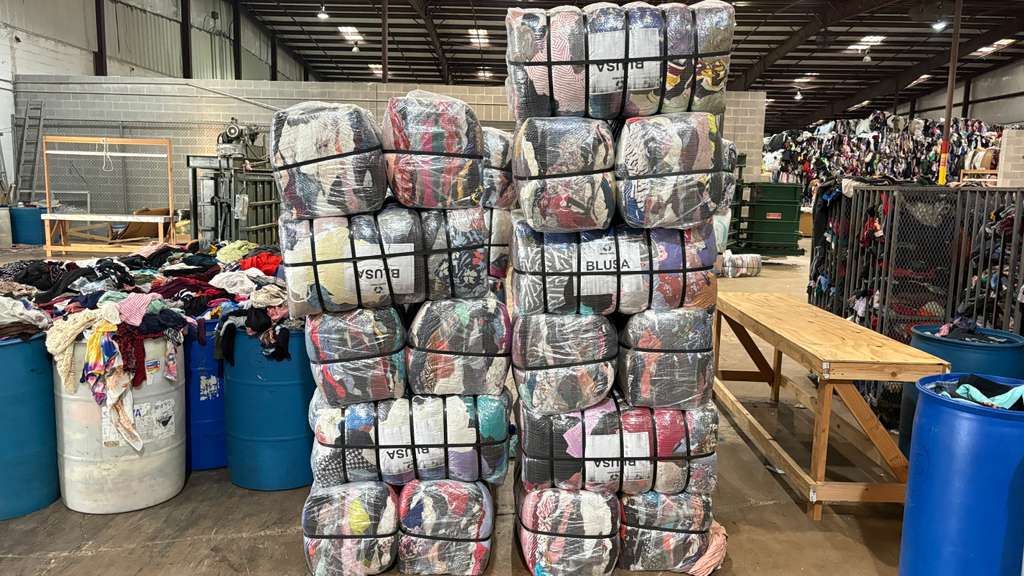
“How many pieces are in the bale?” is a reasonable question: you will eventually work with individual garments. An answer given only in kilograms does not settle it. Before recording a garment quantity, find out whether someone counted that lot or is giving you an approximation.
A weight unit is not a garment count
In a clothing offer, kilograms describe the stated weight; they do not tell you how many garments make it up. Two assortments can have the same weight and different piece counts when individual garment weights differ.
Bales that look the same size or share a category do not settle the count either. Our sorted-clothing catalog explains that the mix changes from bale to bale. A count from an earlier purchase does not automatically become the count of the next one.
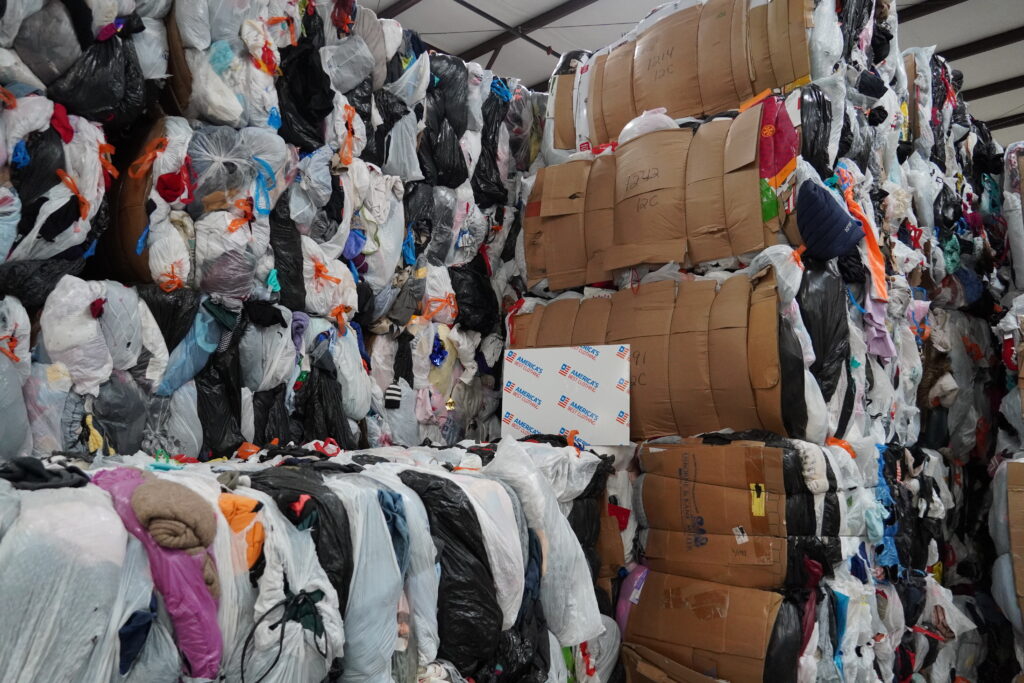
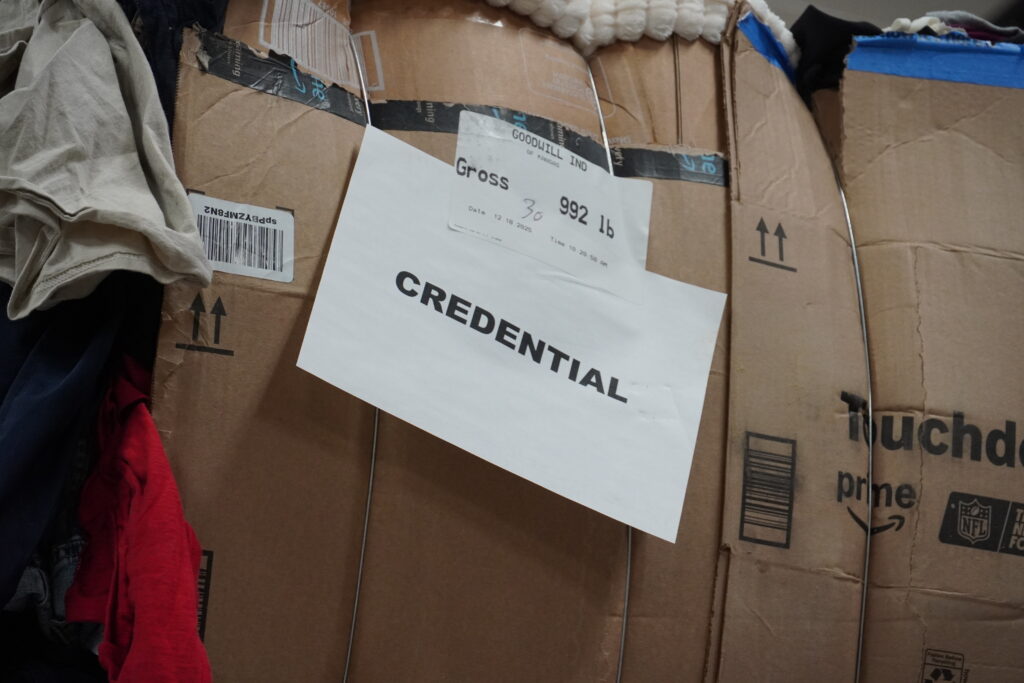
Clarify what the advertised weight covers: one bale, several packages or the complete lot. Ask whether packaging is included too. Keep that answer with the value and unit; it remains separate from the number of garments.
Identify the kind of answer you received
Each of these three answers can be useful, but they describe different things. Preserve that distinction in your purchase notes.
- Reported weight: the quantity in kilograms or pounds and the package or lot it covers. If no piece information is available, say so.
- Lot count: a garment quantity the supplier identifies as counted for that particular offer. Confirm that it covers the complete lot, rather than a sample or a different order.
- Estimate: an approximate number or range. Ask what it is based on and which category or assortment it describes; keep the word “approximate” in your note.
Ask where an estimate came from
A figure may come from an earlier lot, a checked portion or a general category description. Those references are not interchangeable. Ask, “Was that quantity counted for this lot, or is it an estimate? What information was used to estimate it?”
If only part was counted, the result describes that counted part. Multiplying it by the number of packages does not turn it into a full count. Likewise, a general range does not confirm that every bale reaches its upper end.
Avoid filling the gap with a number found online for a different assortment. There is no single kilograms-to-garments conversion that works for every bale. If your purchase plan needs a specific quantity, explain that need and ask what can be confirmed. When a count is unavailable, retain that as a limit of the information.
Keep a three-line purchase note
Before deciding, fill in this worksheet from the response you received. The blanks are for your inquiry; they do not describe an ABC offer.
- Lot and weight: reference ____, amount ____ and unit ____; covers ____; packaging included: ____ or unconfirmed.
- Garments: ____; identify this as a complete-lot count, an estimate or a quantity that is unavailable.
- Basis and open question: the figure comes from ____; still to clarify ____.
Keep quantity separate from the selection
Knowing how many garments were counted does not establish their sizes, condition or suitability for your business. Keep those questions separate. First make clear which quantity you know, then compare the assortment and the other purchase terms.
For current clothing categories and packaging at America’s Best Clothing in Hidalgo, Texas, call or message +1 (956) 769-5738. Explain the type of clothing you want and ask which weight and quantity information is available for the lot being offered.
Further reading and sources
Clarify the quantity in the offer.
Tell us which category you want and which lot detail you need to confirm. Ask about the packaging and available information before purchasing.
Talk on WhatsApp